
Antigens and Antibodies
Antigens and Antibodies: Structure, Function, and Immunological Importance
Introduction
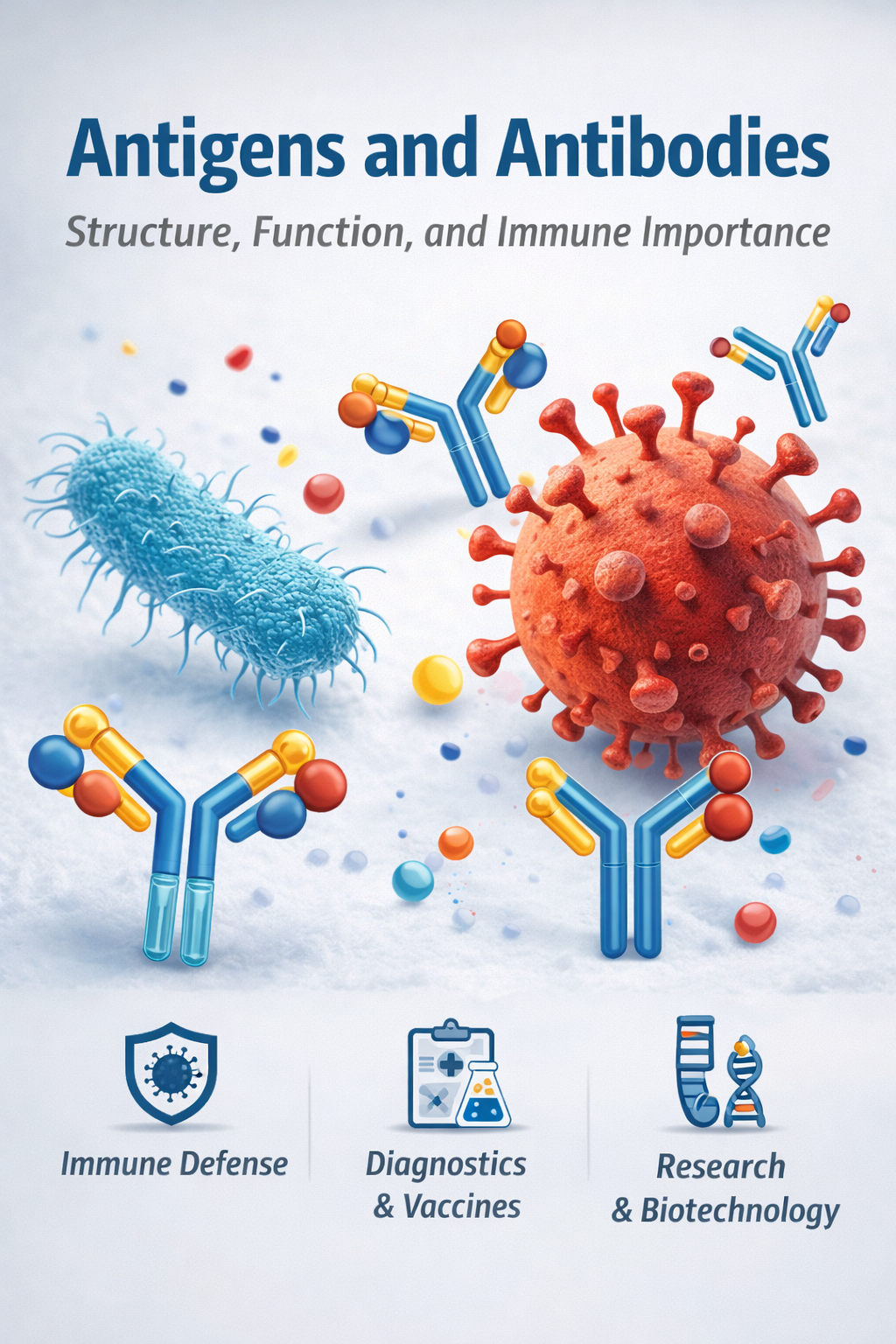
Antigens and antibodies are fundamental components of the immune system, playing a critical role in the body’s defense against pathogens. Their interaction is highly specific and forms the basis of many diagnostic and therapeutic applications in modern medicine and biotechnology.
Understanding how antigens and antibodies function is essential in fields such as immunology, microbiology, vaccine development, and clinical diagnostics.
What Are Antigens?
Antigens are molecules capable of triggering an immune response. They are typically recognized as “foreign” by the immune system and can originate from pathogens such as bacteria, viruses, fungi, or parasites.
Key Characteristics of Antigens
- Usually proteins or polysaccharides
- Contain specific regions called epitopes
- Can be located on the surface of microorganisms or secreted toxins
Types of Antigens
- Exogenous antigens: Enter the body from outside (e.g., bacteria, viruses)
- Endogenous antigens: Produced within infected or abnormal cells
- Autoantigens: Self-molecules that may trigger autoimmune diseases
What Are Antibodies?
Antibodies, also known as immunoglobulins (Ig), are specialized proteins produced by B lymphocytes in response to antigens. Their main function is to recognize and bind specifically to antigens to neutralize or eliminate them.
Structure of Antibodies
Antibodies have a characteristic Y-shaped structure consisting of:
- Two heavy chains
- Two light chains
- Variable regions (antigen-binding sites)
- Constant regions (effector functions)
Types of Antibodies (Immunoglobulins)
There are five main classes of antibodies:
- IgG: Most abundant; provides long-term immunity
- IgA: Found in mucosal areas (saliva, tears, mucus)
- IgM: First antibody produced during an immune response
- IgE: Involved in allergic reactions and parasitic infections
- IgD: Plays a role in B cell activation
Antigen-Antibody Interaction
The binding between an antigen and an antibody is highly specific, often compared to a lock-and-key mechanism.
Forces Involved
- Hydrogen bonds
- Electrostatic interactions
- Van der Waals forces
- Hydrophobic interactions
Biological Outcomes
- Neutralization of toxins or viruses
- Agglutination (clumping of pathogens)
- Opsonization (enhanced phagocytosis)
- Activation of the complement system
Applications in Science and Medicine
1. Diagnostic Techniques
Antigen-antibody reactions are the basis of many laboratory tests, including:
- ELISA (Enzyme-Linked Immunosorbent Assay)
- Rapid diagnostic tests
- Western blotting
2. Vaccine Development
Vaccines introduce antigens to stimulate antibody production, providing immunity without causing disease.
3. Therapeutic Uses
- Monoclonal antibodies for cancer treatment
- Immunotherapy for autoimmune diseases
- Passive immunization
Importance in Biotechnology
In biotechnology and laboratory research, antigen-antibody interactions are widely used for:
- Protein detection and quantification
- Biomarker identification
- Drug development
- Molecular diagnostics
Conclusion
Antigens and antibodies are essential players in the immune system, ensuring protection against harmful pathogens. Their specificity and versatility make them indispensable tools in modern science, from diagnostics to advanced therapeutics.
A deeper understanding of their mechanisms not only enhances our knowledge of immunity but also drives innovation in medicine and biotechnology.