
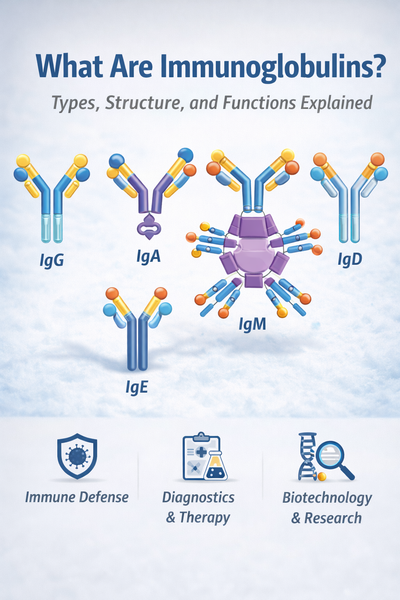
What Are Immunoglobulins? (Types, Structure, and Functions)
2nd Apr 2026
what Are Immunoglobulins?
Introduction
Immunoglobulins, also known as antibodies, are essential glycoproteins produced by B lymphocytes (plasma cells) in response to antigens. They play a central role in the adaptive immune system by recognizing and neutralizing pathogens such as bacteria, viruses, and toxins.
Structure of Immunoglobulins
Immunoglobulins have a characteristic Y-shaped structure composed of:
- Two heavy chains (H chains)
- Two light chains (L chains)
- Chains are linked by disulfide bonds
Key Structural Regions
- Variable region (Fab region)
- Located at the tips of the Y
- Responsible for antigen binding
- Highly specific to each antigen
- Constant region (Fc region)
- Determines the class of the antibody
- Mediates immune functions (e.g., complement activation, binding to immune cells)
Important Features
- Antigen-binding sites (paratopes)
- Hinge region (provides flexibility)
- Glycosylation sites (important for stability and function)
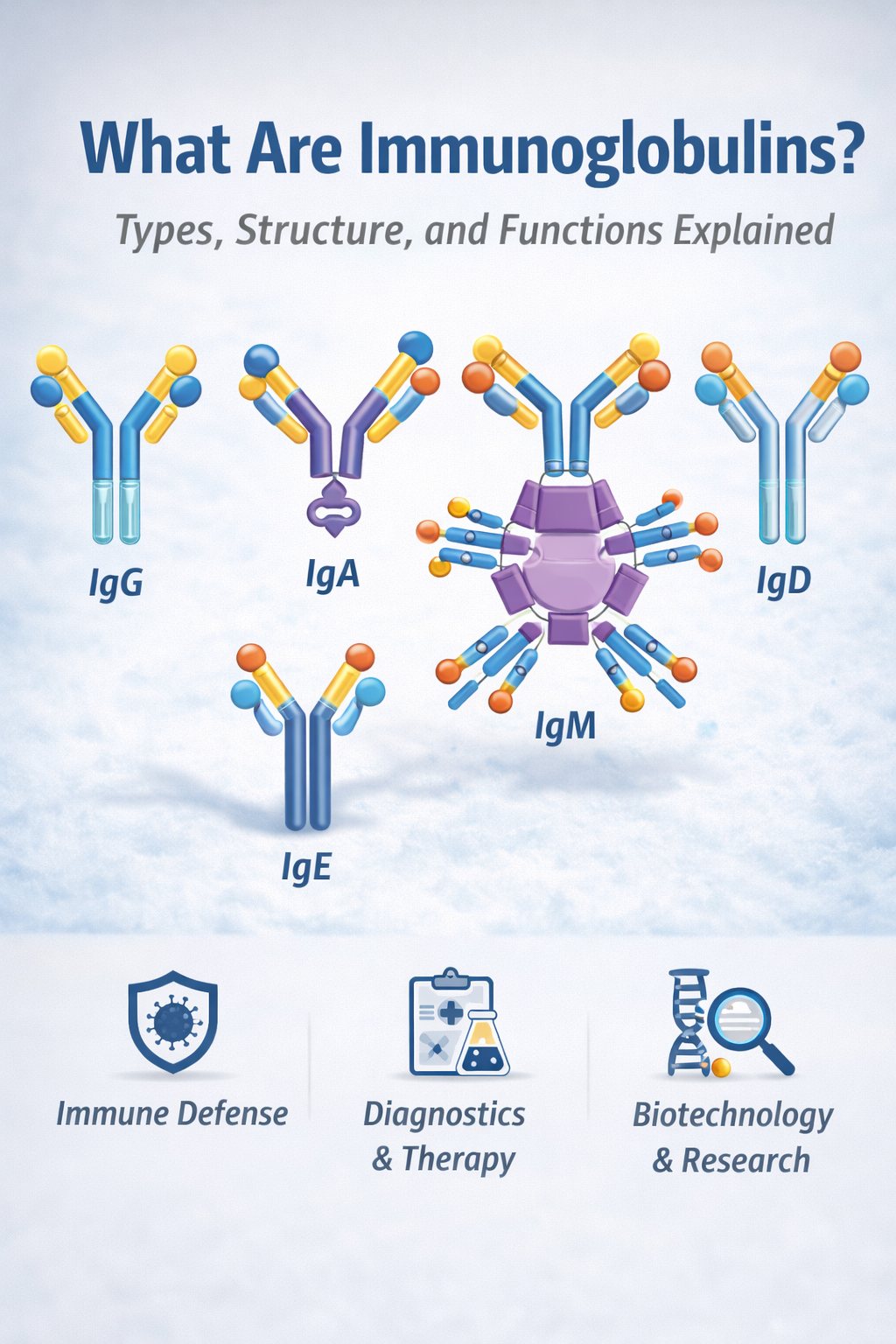
Types of Immunoglobulins
There are five major classes of immunoglobulins, each with distinct roles:
1. IgG
- Most abundant antibody in blood (~75%)
- Provides long-term immunity
- Can cross the placenta (passive immunity to fetus)
- Involved in opsonization and neutralization
2. IgA
- Found in mucosal secretions (saliva, tears, milk, respiratory and intestinal fluids)
- Protects mucosal surfaces
- Exists as a dimer
3. IgM
- First antibody produced during an immune response
- Exists as a pentamer (5 units)
- Very effective in agglutination and complement activation
4. IgE
- Involved in allergic reactions
- Plays a role in defense against parasites
- Binds to mast cells and basophils
5. IgD
- Found mainly on the surface of B cells
- Involved in B cell activation and regulation
- Present in low concentrations in serum
Functions of Immunoglobulins
Immunoglobulins perform several critical immune functions:
- Neutralization of toxins and viruses
- Opsonization (enhancing phagocytosis)
- Activation of the complement system
- Agglutination of pathogens
- Immune system signaling
Importance in Medicine and Biotechnology
Immunoglobulins are widely used in:
Diagnostics
- ELISA tests
- Rapid antigen tests
- Serological assays
Therapeutics
- Monoclonal antibody treatments (cancer, autoimmune diseases)
- Immunotherapy
Research
- Protein detection
- Biomarker analysis
- Vaccine development
Conclusion
Immunoglobulins are vital components of the immune system, ensuring precise recognition and elimination of pathogens. Their structural diversity and functional specificity make them indispensable in both natural immunity and modern biomedical applications.