
Chemical Methods of Sterilization: Principles, Techniques, and Applications
17th Apr 2026
Chemical Methods of Sterilization: Principles, Techniques, and Applications
Introduction
Sterilization is a fundamental process in microbiology, healthcare, and laboratory environments, ensuring the complete elimination of all forms of microbial life, including bacteria, viruses, fungi, and spores. While physical methods such as heat and radiation are widely used, chemical methods of sterilization play a critical role when dealing with heat-sensitive materials.
This article explores the principles, mechanisms, types, advantages, and limitations of chemical sterilization techniques widely used in modern science and industry.
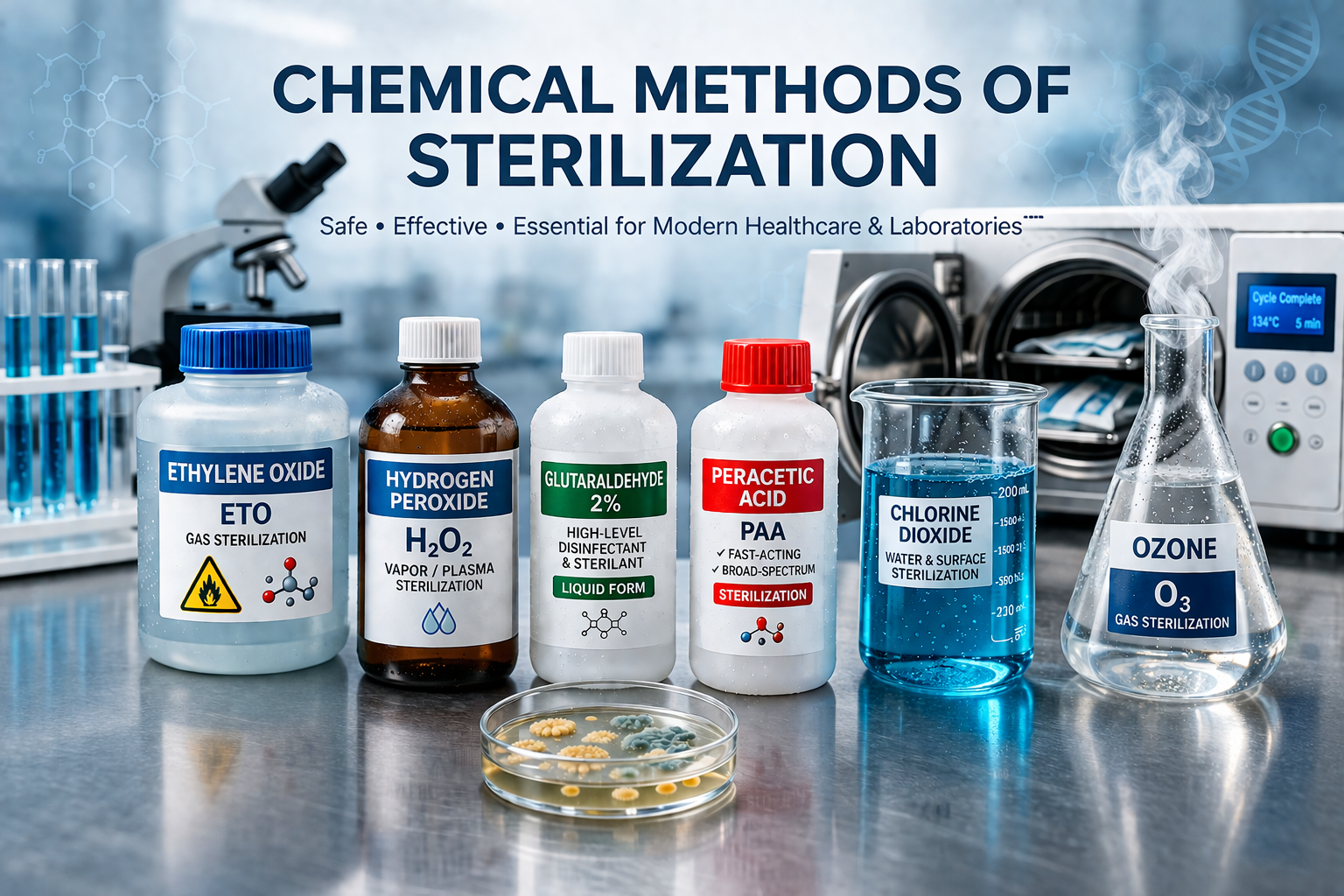
What is Chemical Sterilization?
Chemical sterilization refers to the use of chemical agents to destroy or eliminate all microorganisms. These methods are especially useful for sterilizing:
- Medical instruments (endoscopes, catheters)
- Laboratory equipment
- Pharmaceutical products
- Plastic and heat-sensitive materials
Unlike disinfection, which reduces microbial load, sterilization ensures complete microbial destruction.
Mechanism of Action
Chemical sterilizing agents work through several mechanisms:
- Protein denaturation: Alters microbial proteins, leading to cell death
- Oxidation: Damages cellular components like membranes and DNA
- Alkylation: Disrupts DNA replication and enzyme function
- Cell membrane disruption: Leads to leakage of cellular contents
Major Chemical Methods of Sterilization
1. Ethylene Oxide (EtO) Sterilization
Ethylene oxide is a highly effective gaseous sterilant used for temperature-sensitive materials.
Key Features:
- Penetrates packaging materials
- Effective against spores, bacteria, and viruses
- Requires controlled humidity and temperature
Applications:
- Medical devices (syringes, surgical kits)
- Electronics and plastic materials
Limitations:
- Toxic and potentially carcinogenic
- Requires aeration to remove residues
2. Hydrogen Peroxide (H₂O₂) Sterilization
Hydrogen peroxide is widely used in vaporized or plasma form.
Mechanism:
- Produces free radicals that attack cellular components
Advantages:
- Fast cycle times
- No toxic residues (breaks down into water and oxygen)
Applications:
- Hospital instruments
- Cleanroom sterilization
3. Glutaraldehyde
A high-level disinfectant often used as a sterilant under specific conditions.
Properties:
- Effective against bacteria, spores, fungi, and viruses
- Requires long exposure time for sterilization
Applications:
- Endoscopes and medical equipment
Drawbacks:
- Toxic and irritating to skin and respiratory tract
4. Peracetic Acid
A strong oxidizing agent used in liquid sterilization systems.
Advantages:
- Effective in the presence of organic matter
- Rapid action
Applications:
- Dialysis equipment
- Food and beverage industry
5. Chlorine Compounds
Includes sodium hypochlorite and chlorine dioxide.
Mechanism:
- Oxidizes cellular components
Uses:
- Water treatment
- Surface sterilization
Limitations:
- Corrosive
- Reduced efficacy in organic matter
6. Ozone Sterilization
Ozone gas is a powerful oxidizing agent.
Advantages:
- Environmentally friendly
- Leaves no residue
Applications:
- Water purification
- Air sterilization systems
Comparison of Chemical Sterilization Methods
| Method | Form | Speed | Toxicity | Main Use |
|---|---|---|---|---|
| Ethylene Oxide | Gas | Slow | High | Medical devices |
| Hydrogen Peroxide | Vapor | Fast | Low | Hospital instruments |
| Glutaraldehyde | Liquid | Moderate | High | Endoscopes |
| Peracetic Acid | Liquid | Fast | Moderate | Food industry, dialysis |
| Chlorine Compounds | Liquid | Fast | Moderate | Water treatment |
| Ozone | Gas | Moderate | Low | Air and water sterilization |
Advantages of Chemical Sterilization
- Suitable for heat-sensitive materials
- Wide range of applications in healthcare and industry
Limitations and Safety Considerations
- Toxicity and occupational hazards
- Residue removal requirements
- Material compatibility issues
- Environmental concerns
Proper handling, ventilation, and regulatory compliance are essential when using chemical sterilants.
Applications Across Industries
Healthcare
- Sterilization of surgical tools and medical devices
Pharmaceutical Industry
- Sterile production of drugs and vaccines
Food Industry
- Prevention of microbial contamination
Water Treatment
- Elimination of pathogens in drinking water
Conclusion
Chemical methods of sterilization are indispensable in modern science and industry, offering versatile solutions where physical methods fall short. Understanding their mechanisms, applications, and limitations allows professionals to select the most appropriate sterilization technique for specific needs.
As technology advances, safer and more eco-friendly chemical sterilization methods continue to emerge, improving both efficiency and sustainability.