
S-TRANS Rapid Multi-Channel Semi-Dry Transfer Instrument
S-TRANS Rapid Multi-Channel Semi-Dry Transfer Instrument
A rapid semi-dry protein transfer system designed to significantly reduce transfer time while providing efficient and reproducible Western blot workflows.
VIEW PRODUCT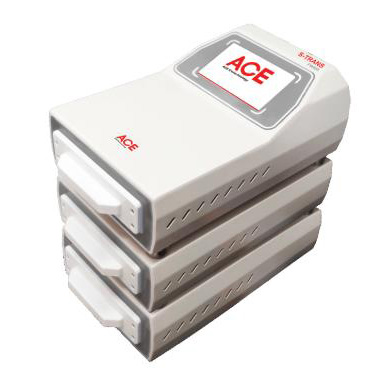
S-TRANS Rapid Multi-Channel Semi-Dry Transfer Instrument
Electrical protein transfer is a widely used technique in research and diagnostic laboratories. Traditional wet transfer workflows can require more than one and a half hours for reagent preparation and the transfer process.
The S-TRANS rapid multi-channel semi-dry transfer instrument from ACE is designed to substantially shorten protein transfer time while maintaining transfer performance. The transfer can be completed in as little as 5 minutes under suitable conditions.
The S-TRANS system combines a main instrument, semi-dry transfer box, anode and cathode buffer solutions, and a high-efficiency transfer gasket. The supplied transfer buffers are designed to support high transfer efficiency and reproducibility.
Fast, Flexible Protein Transfer
| ✓ Rapid Transfer Protein transfer time can be shortened to as little as 5 minutes under suitable conditions. |
✓ High Transfer Efficiency Dedicated S-TRANS transfer buffers support efficient and reproducible protein transfer. |
| ✓ Multi-Channel Design The main unit can be expanded with up to two auxiliary units for increased transfer capacity. |
✓ Space-Saving Configuration Main and auxiliary units can be stacked to save laboratory bench space. |
| ✓ Mini Gel Capacity Each semi-dry transfer box can accommodate up to two Mini 7.0 × 8.5 cm gels. |
✓ Programmable Operation Transfer programs can be preset, modified and operated through a convenient workflow. |
S-TRANS Transfer System
| Main Unit | Primary control and power unit for the S-TRANS system. |
| Auxiliary Units | Up to two auxiliary units can be connected to the main unit without requiring separate power supplies. |
| Semi-Dry Transfer Box | Transfer box designed for Mini gels up to 7.0 × 8.5 cm. |
| Anode Buffer | S-TRANS anode buffer for the semi-dry transfer workflow. |
| Cathode Buffer | S-TRANS cathode buffer for the semi-dry transfer workflow. |
| High-Efficiency Transfer Gasket | S-TRANS high-efficiency transfer gasket, 7.0 × 9.5 cm. |
Simple Semi-Dry Transfer Procedure
| 1 | Prepare the gel and membrane according to the transfer workflow. |
| 2 | For nitrocellulose or PVDF membranes, equilibrate the membrane in the anode solution for more than 15 minutes. |
| 3 | Assemble the gel and membrane sandwich structure using the appropriate transfer materials. |
| 4 | Place the assembled sandwich into the semi-dry transfer box and close the lid. |
| 5 | Insert the transfer box, select or edit the appropriate transfer program, and start the transfer. |
Multi-Channel Transfer Configuration
The S-TRANS main unit can operate with up to two expansion auxiliary units. The auxiliary units provide the same transfer function as the main unit and receive their power and operation control from the main unit.
The units can be stacked vertically, with the main unit positioned above the auxiliary units. With the full configuration, the system can support multiple transfers simultaneously while conserving laboratory bench space.
Operating Guidelines
The S-TRANS system should be operated at an ambient temperature of 15–31°C and relative humidity of 0–95%.
Maintain at least 6 cm of clearance around the instrument and ensure that the ventilation openings on the sides and rear remain unobstructed.
Always connect the instrument to a properly grounded AC socket using the supplied power cord. The transfer box may become hot after operation, so use appropriate caution when removing it.
The system and transfer box are incompatible with strong acids or bases, chlorinated hydrocarbons, aromatic hydrocarbons and acetone. Clean the instrument using water and mild detergent; avoid abrasives and organic solvents.
The S-TRANS system is intended for laboratory use only and should be installed and operated in a clean, dry location.
Cleaning and Care
After transfer, rinse the base and cover of the transfer box with deionized water to remove residual buffer salts and help prevent salt accumulation.
Allow components to dry at room temperature or wipe the anode and cathode plates with a paper towel. The cathode stainless steel plate can be cleaned with 5% acetic acid followed by water.
Regular cleaning according to the manufacturer's instructions is recommended to maintain the performance and longevity of the S-TRANS system.
Western Blot and Protein Transfer
The S-TRANS rapid multi-channel semi-dry transfer instrument is designed for transferring proteins from electrophoresis gels to membranes as part of Western blot and other protein analysis workflows.
Its rapid transfer capability, programmable operation and expandable multi-channel configuration make it suitable for laboratories requiring efficient and repeatable protein transfer.
Explore the S-TRANS Transfer Instrument
Discover a rapid semi-dry transfer solution designed to simplify and accelerate protein transfer workflows.
VIEW PRODUCT