
cfDNA Extraction
16th Mar 2026
cfDNA Extraction
Introduction to cfDNA Extraction
cfDNA extraction is a critical molecular biology process used to isolate circulating cell-free DNA (cfDNA) from biological fluids such as plasma, serum, urine, and cerebrospinal fluid. cfDNA fragments are typically released into the bloodstream during apoptosis, necrosis, or active secretion from cells. Because of this, cfDNA extraction plays an essential role in liquid biopsy, cancer diagnostics, prenatal testing, transplant monitoring, and infectious disease detection.
Compared with genomic DNA isolation, cfDNA extraction requires highly sensitive methods due to the low concentration and fragmented nature of circulating DNA. Efficient extraction protocols are therefore essential to maximize yield and ensure compatibility with downstream techniques such as PCR, qPCR, and next-generation sequencing (NGS).
Principles of cfDNA Extraction
The goal of cfDNA extraction is to recover short DNA fragments (usually 150–200 bp) while removing proteins, lipids, and other contaminants.
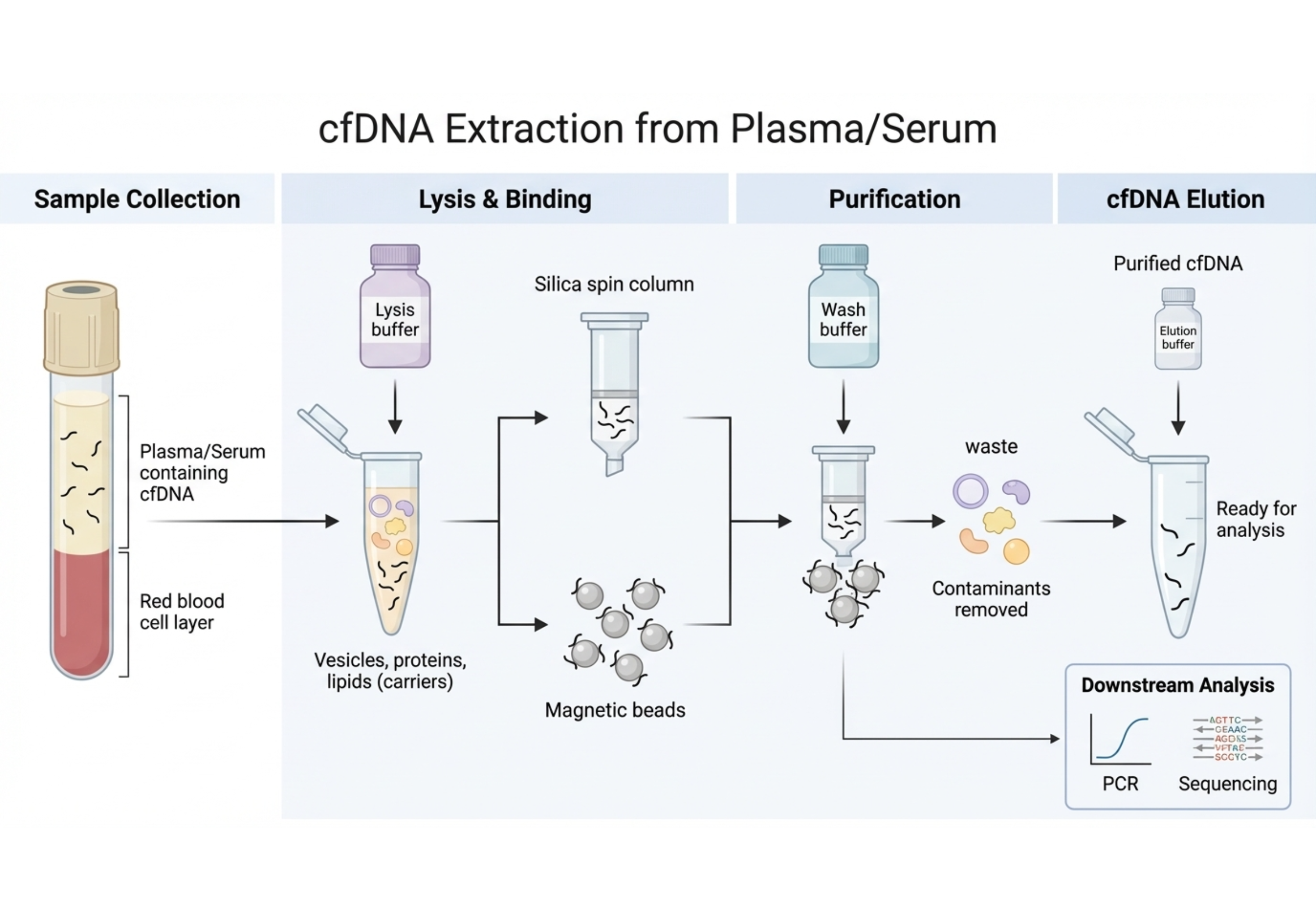
A typical workflow includes:
-
Sample preparation
Plasma or serum samples are obtained from whole blood using centrifugation to remove cells and debris. -
Lysis step
Lysis buffers break open vesicles and release DNA bound to proteins or lipoprotein complexes. -
Binding of DNA
cfDNA selectively binds to silica membranes or magnetic beads in the presence of chaotropic salts. -
Washing steps
Contaminants such as proteins, salts, and inhibitors are removed. -
Elution
Purified cfDNA is eluted in nuclease-free water or elution buffer for downstream analysis .
cfDNA Extraction Methods
Several technologies are commonly used for cfDNA extraction, each with advantages depending on laboratory workflow and sample throughput.
Silica Membrane Spin Column Method
Silica membrane columns are widely used for cfDNA purification in research laboratories.
Key features include:
-
High binding efficiency for short DNA fragments
-
Rapid processing using centrifugation
-
Reliable purification for small to medium sample batches
During extraction, cfDNA binds to the silica membrane in the presence of high salt concentrations. After washing steps, purified DNA is eluted in low-salt buffer.
Magnetic Bead-Based cfDNA Extraction
Magnetic bead technology is increasingly used for automated cfDNA extraction.
Advantages include:
-
Easy automation on liquid-handling platforms
-
High reproducibility and scalability
-
Reduced manual handling and contamination risk
Magnetic beads coated with DNA-binding surfaces capture cfDNA fragments, which are then washed and eluted using magnetic separation.
Sample Input Volume for cfDNA Extraction
The starting volume significantly affects cfDNA yield.
Typical plasma input volumes include:
| Sample Type | Typical Input Volume |
|---|---|
| Plasma | 1–10 mL |
| Serum | 1–5 mL |
| Urine | 5–10 mL |
In many clinical workflows, 4 mL of plasma is commonly used because it corresponds to the plasma obtained from one standard blood collection tube.
Higher volumes are often required for detecting low-frequency mutations or rare circulating tumor DNA (ctDNA).
Carrier RNA in cfDNA Extraction
Some cfDNA extraction protocols allow the addition of carrier RNA during the binding step.
Benefits may include:
-
Improved recovery of low-concentration DNA
-
Stabilization of nucleic acids during purification
-
Increased binding efficiency
However, carrier RNA may interfere with certain downstream analyses, particularly sequencing-based assays or quantitative PCR methods.
Therefore, the use of carrier RNA depends on the sensitivity requirements of the downstream application.
Automated cfDNA Extraction
Automation is increasingly adopted in clinical laboratories performing cfDNA extraction at scale.
Automated platforms provide several advantages:
-
Standardized workflows
-
Reduced hands-on time
-
Improved reproducibility
-
Integration with laboratory information management systems (LIMS)
Automated purification systems are commonly used in translational research and diagnostic laboratories, where consistency and traceability are essential.
Quality Control in cfDNA Extraction
Because cfDNA concentrations are extremely low, background contamination must be carefully controlled.
Common quality control measures include:
-
Performing blank extractions using water as a negative control
-
Measuring DNA concentration using highly sensitive assays
-
Assessing fragment size distribution with electrophoresis or capillary analysis
These controls ensure that detected DNA signals originate from the biological sample rather than experimental contamination.
Storage of Purified cfDNA
Proper storage conditions are essential to maintain cfDNA integrity after extraction.
Recommended conditions include:
-
−20 °C to −30 °C for medium-term storage
-
−80 °C for long-term storage
cfDNA should be stored in nuclease-free water or elution buffer to prevent degradation. Under these conditions, cfDNA stability can be maintained for extended periods without significant loss of quality.
Applications of cfDNA Extraction
The ability to isolate circulating DNA has transformed many areas of biomedical research and diagnostics.
Important applications include:
-
Liquid biopsy for cancer detection
-
Circulating tumor DNA (ctDNA) analysis
-
Non-invasive prenatal testing (NIPT)
-
Organ transplant rejection monitoring
-
Pathogen detection in blood
As sequencing technologies continue to advance, cfDNA extraction will remain a cornerstone technique for non-invasive molecular diagnostics.