
Plasmid Isolation
4th May 2026
Plasmid Isolation: Simple Scientific Guide for Fast and Reliable DNA Extraction
What is Plasmid Isolation?
Plasmid Isolation is a laboratory technique used to extract plasmid DNA from bacterial cells. Plasmids are small circular DNA molecules that replicate independently from chromosomal DNA and are widely used in molecular biology experiments.
This method is essential for obtaining clean plasmid DNA for cloning, sequencing, and genetic engineering.
Principle of Plasmid Isolation
The principle of Plasmid Isolation is based on separating plasmid DNA from genomic DNA and cellular components using selective lysis and precipitation.
Key idea:
- Plasmid DNA stays stable in solution
- Genomic DNA and proteins are removed during lysis and neutralization
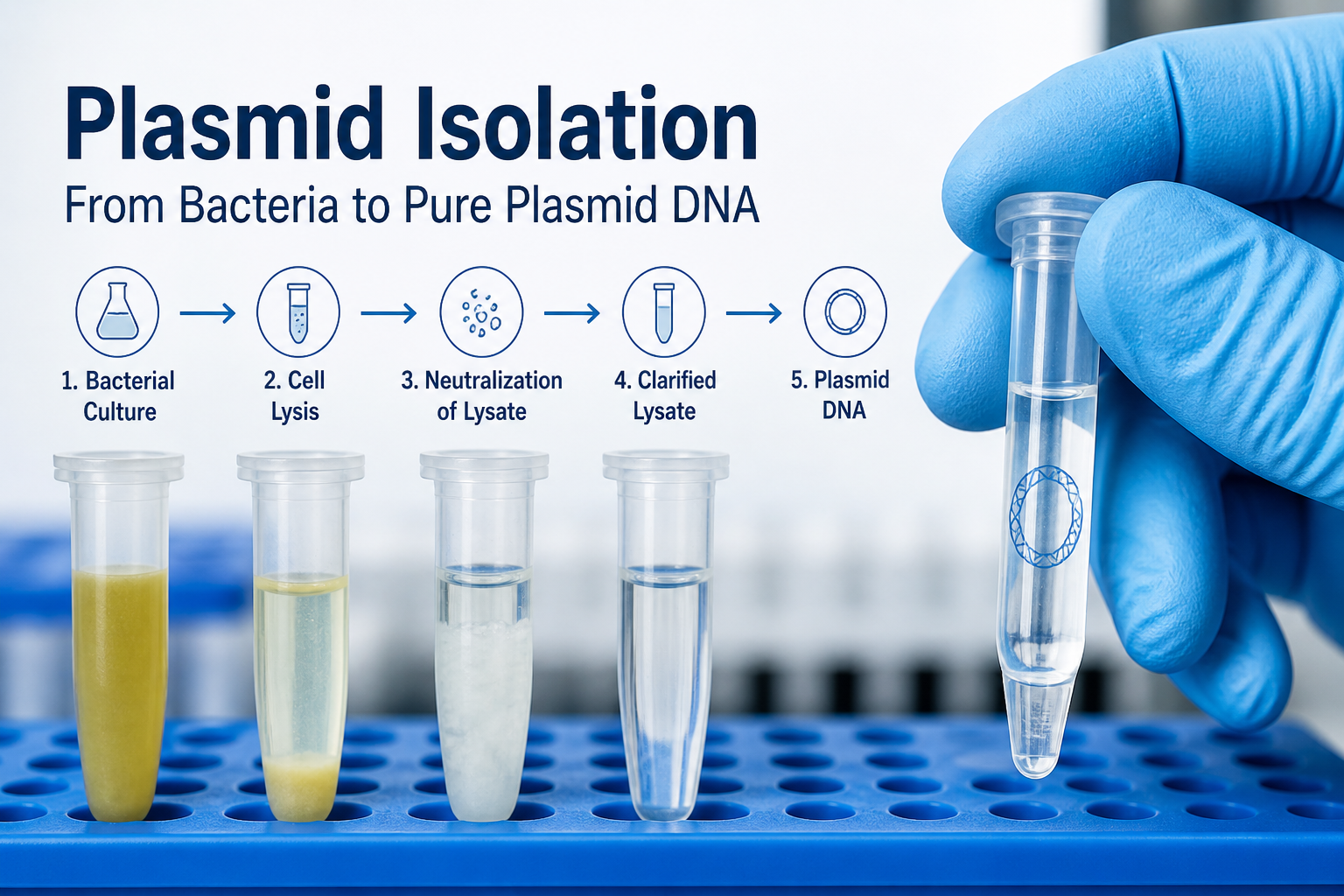
Simple Steps of Plasmid Isolation
1. Bacterial Growth
E. coli cells are grown overnight in selective antibiotic media.
2. Cell Harvesting
Cells are collected by centrifugation.
3. Cell Lysis
Alkaline solution breaks open bacterial cells.
4. Neutralization
Chromosomal DNA and proteins precipitate.
5. DNA Separation
Plasmid DNA remains in the supernatant.
6. Purification
DNA is purified using ethanol or spin columns.
Common Method Used in Plasmid Isolation
The most widely used method is:
Alkaline Lysis Method
- Fast and simple
- Works for most plasmids
- Suitable for routine lab work
Applications of Plasmid Isolation
Plasmid Isolation is used in:
- Gene cloning
- DNA sequencing
- Recombinant protein production
- CRISPR research
- Molecular diagnostics
Why Plasmid Isolation is Important
Without high-quality plasmid DNA:
- PCR may fail
- Sequencing results may be incorrect
- Gene expression efficiency decreases
Good isolation ensures reliable molecular biology experiments.
Tips for Better Plasmid Yield
- Use fresh overnight bacterial culture
- Avoid overgrowth of bacteria
- Keep samples cold during purification
- Use high-quality reagents
- Follow centrifugation times strictly
Conclusion
Plasmid Isolation is a basic but essential molecular biology technique that allows researchers to extract clean plasmid DNA for cloning, sequencing, and genetic engineering applications. A simple alkaline lysis method remains the fastest and most effective approach for routine laboratory use.